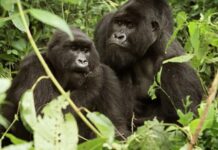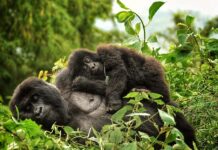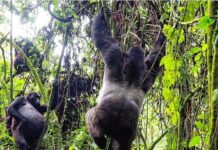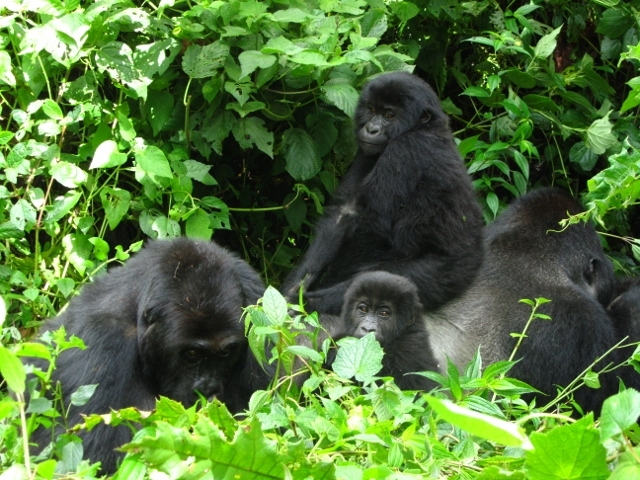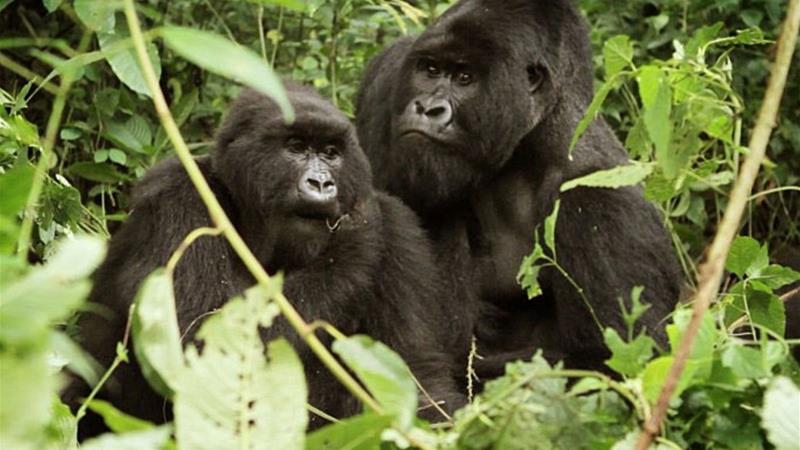
Bwindi Impenetrable National Park is one of Africa’s most famous national parks and premier destination for mountain gorilla trekking in Uganda. Located in southwestern Uganda, Bwindi is renowned for its ancient rainforest, exceptional biodiversity and its role in protecting nearly half of the world’s remaining wild mountain gorillas.
Bwindi covers approximately 331 square kilometers (128 square miles) and sits at elevations ranging from 1,160 to 2,607 meters (3,806-8,553 feet) above sea level. It was designated a UNESCO World Heritage Site in 1994 because of its outstanding biodiversity and ecological importance.
Location
Bwindi is located in southwestern Uganda, bordering the Democratic Republic of Congo and close to the Virunga Mountains.
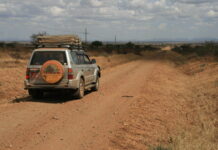
Approximate driving times:
- From Kampala: 8-10 hours
- From Entebbe: 9-10 hours
- From Kigali: 4-5 hours (via the Uganda- Rwanda border)
Domestic fights are also available to nearby airstrips such as Kihihi and Kisoro.
History
The forest is estimated to be more than 25,000 years old, making it one of Africa’s oldest surviving tropical rain forests.
The area became:
- A forest reserve in 1932.
- A National Park in 1991.
- A UNESCO World Heritage Site in 1994.
- Since then, there conservation efforts have helped increase mountain gorilla numbers while supporting local communities through tourism.
Why is it called the ‘’Impenetrable’’?
The name comes from its:
- Dense vegetation
- Thick bamboo and vines
- Steep valleys
- Mountainous terrain
Walking through the forest without established trails is extremely difficult.
Mountain Gorilla Trekking
The park’s biggest attraction is trekking to see endangered mountain gorillas in their natural habitat.
Gorilla Families
Bwindi has more 20 habituated gorilla families, and they spread across four trekking sectors.
- Buhoma
- Ruhija
- Rushaga
- Nkuringo
Each gorilla family is visited by a maximum of 8 tourists per day helping minimize disturbance to the gorillas.
The Trekking Experience
A typical trekking day includes:
- Early morning registration and briefing
- Assignment to a gorilla family
- Guided hike through the forest
- Finding the gorillas
- Spending one hour observing them.
Treks may last anywhere from 1 to 8 hours, depending on where the gorillas are located.
Gorilla Habituation Experience
Unlike the standard trek, the Gorilla Habituation Experience allows visitors to spend up to 4 hours with a semi-habituated gorilla family alongside researchers and rangers.
This experience is currently available only at Rushaga sector.
Wildlife
Besides mountain gorillas, Bwindi is home to:
- Chimpanzees
- Black and white Colobus monkeys
- L’Hoest’s monkeys
- Blue monkeys
- Olive baboons
- Forest elephants
- Giant forest hogs
- Bush pigs
- Several antelope species
Birdlife
Bwindi is one of Africa’s best bird watching destinations.
The park has over 350 bird species including many found only in the Albertine Rift.
Notable birds include:
- African green broad hill
- Shelley’s crimsonwing
- Grauer’s rush warbler
- Handsome francolin
- Rwenzori batis
Plant life
The forest contains:
- More than 1,000 flowering plant species
- Hundreds of tree species
- Ferns
- Bamboo
- Orchids
- Medicinal plants used by local communities
Other activities
Visitors can also enjoy:
- Guided nature walks
- Bird watching
- Waterfall hikes
- Mountain biking (in some areas)
- Community visits
- Cultural experience with the Batwa, the forest’s original inhabitants
Climate
Bwindi has a cool, humid mountain climate
Average temperatures
- Day: 20 – 27 degrees Celsius
- Night 7 – 15 degrees Celsius
Rain can fall at any time of the year.
Best time to visit
The park is open year round but the drier seasons are generally preferred:
- June to August
- December to February
The wetter seasons (March – May and September – November) offer lush scenery and fewer visitors but trails can be muddy.
What to pack
- Waterproof hiking boots
- Long trousers and long sleeved shirt
- Rain jacket
- Gardening gloves
- Insect repellent
- Hat
- Camera (no flash)
- Reusable water bottle
- Small backpack
- Walking stick (often provided at the park)
Conservation
Bwindi Impenetrable National Park is managed by the Uganda Wildlife Authority in partnership with local communities and international conservation organizations.
Tourism revenue supports:
- Gorilla conservation
- Anti-poaching patrols
- Research
- Community development
- Education and healthcare project in nearby villages
Why Visit Bwindi?
Bwindi Impenetrable National Park is one of the world’s finest wildlife destinations because it offers:
- The opportunity to see endangered mountain gorillas in the wild.
- One of Africa’s oldest tropical rainforests.
- Exceptional biodiversity.
- Rich culture experiences.
- Beautiful scenery with mist-covered hills and dense forests.
For many visitors, meeting a mountain gorilla family in Bwindi forest is a once-in-a-lifetime experience and one of the most memorable wildlife encounters anywhere in the world.