Elephant options in Africa May 2, 2008
Posted by Ralph Pina in : Animals, Conservation, Safari, Tourism, ecotourism , 1 comment so far
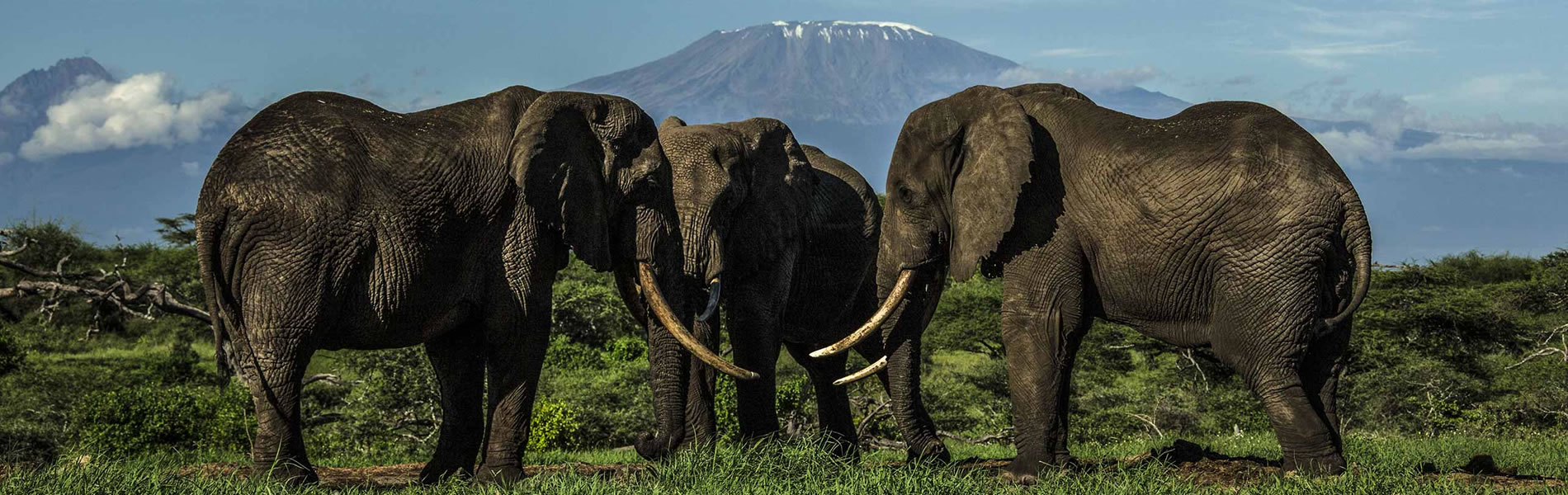
No doubt you have heard by now that South Africa has decided that culling will once again be an optional intervention in the management of elephant populations, albeit an intervention of last resort, to address what is known as “the elephant problem”. Elephant conservation has been enormously successful in southern Africa (58% of the population), to the extent that some conservationists now argue that there are “too many” elephants. Personally, I think that the problem could be restated as “too little elephant habitat”. (more…)
Corridors, Climate Change and Democracy April 16, 2008
Posted by Clarissa Hughes in : Climate Change, Conservation , add a comment
Corridors are the sexiest thing in conservation. It has been realised for some time now that Africa will be one of the continents hardest hit by the effects of climate change. When Africa’s protected areas were initially proclaimed, no-one foresaw the increases in human population that we’ve experienced, and now these areas are islands in a sea of humanity.
Lesotho and Tutu: What do they have in common? April 8, 2008
Posted by Clarissa Hughes in : African Peoples, Tourism , add a comment
Apart from the cute rhyme there are a number of traits that are common to the Archbishop emeritus and the small southern Africa Kingdom.
Contained in the fortress of the Drakensberg and Maluti mountains Lesotho lies 1000m above sea level - close to God.
Like Desmond Tutu, the Basotho people under their founder, King Moshoeshoe, fought hard for independence and self-governance. And, after conquering his foes, King Moshoeshoe remained generous and gracious in his exalted position.
Mother of All Crocodiles April 2, 2008
Posted by Clarissa Hughes in : Animals, Community, Conservation, ecotourism , add a comment
Madikwe, short for Madikwena, meaning Mother of All Crocodiles is a shining example of ecotourism success in Africa. This 76,000 hectare reserve was created in 1994 and was the subject of the largest game reintroduction exercise on the planet. Operation Phoenix saw the translocation of 8000 animals over a period of 8 years. The fully fenced reserve offers an almost unique location to view both desert adapted species, and the more regular bushveld animals. Gemsbok, brown hyena and eland occur; as do buffalo, elephant and spotted hyena.
Is it only about “the Big 5″? February 17, 2008
Posted by Ralph Pina in : Conservation, Tourism, ecotourism , 1 comment so far
Every once in a while I trawl through the research output of academia, specifically in the fields of ecotourism, sustainable tourism and ecotourism certification. The other day I came across the following article in the Journal of Ecotourism (vol 6, no. 1, 2007) entitled “Wildlife viewing preferences of visitors to protected areas in South Africa: Implications for the role of ecotourism in conservation“.
The article’s conclusions are particularly interesting, given the prevailing wisdom in the tourism industry that tourists to Africa are only interested in seeing the “Big 5″ - leopard, lion, elephant, rhino and buffalo. Just recently we have been debating this issue in ecoAfrica, so the research is timeous and topical for us. I for one have always been loathe to accept that only the Big 5 holds any attraction to travellers to our continent. (more…)
Power down in South Africa continued… February 2, 2008
Posted by Ralph Pina in : Climate Change, Conservation, Sustainability , add a comment
Here’s an excellent post from my favourite blog about energy and the crisis that faces us, The Oil Drum: Understanding the current energy crisis in South Africa, in which the authors point out that the underlying problem is exponential growth. To quote:
Yes, at this rate of growth we will double our economy. What is it we will be doubling? We will double our GDP. This means we will double what we produce. In order to double what we produce we will need to double what goes into what we produce. This includes raw materials and crucially, energy. Yes. Roughly speaking, on this growth path, in the next 11 years we are going to need to double the amount of energy we are currently consuming.
As Albert Bartlett, Professor Emeritus, Physics Department, University of Colorado, once wrote: “The greatest shortcoming of the human race is our inability to understand the exponential function”.
Powerdown and travel January 24, 2008
Posted by Ralph Pina in : Climate Change, Conservation, News, Sustainability, Tourism , 1 comment so far
The CEO of the Southern African Tourism Services Association (SATSA), Michael Tatalias, attracted the ire of both Eskom, South Africa’s power utility, and FIFA, world football’s governing body, when he stated that Eskom’s rolling blackouts are threats to both tourism and the 2010 World Cup.
Predictably, the local media latched on to these statements, which I agree are rather sensationalist, and trumpeted them loudly, but failed to even mention the other half of his statement which asks what we as citizens and businesses are doing to curtail our consumption of energy. (Also see my post on this subject recently)
Powerdown in South Africa January 22, 2008
Posted by Ralph Pina in : Climate Change, Conservation, Sustainability , 4comments
This post is only tangentially related to travel, but it has a lot to do with sustainability, so I thought I would vent here on this blog anyway. As I sit here writing this, South Africa has entered a period of rolling blackouts. The cause is uncontested: the government failed to allow the national power utility, Eskom, to create generation capacity way back in the ’90s. After an unprecedented period of economic growth the chickens have come home to roost and the reserve margin is down to 8% so that the grid has no resilience when capacity is temporarily reduced by an outage or when demand spikes. Meanwhile the demand trendline shows unabated growth. The crisis is expected to last for another seven years, by when additional generating capacity should come online.
But what interests me are the reactions to the crisis from my fellow citizens, which only serve to show how difficult it is to change behaviour and how invested in our energy-intensive consumer-age paradigm we are. (more…)
Free Energy – 1st in Commonwealth Vision Awards January 2, 2008
Posted by Clarissa Hughes in : Climate Change, Community, News , add a comment
Nestling between the sweep of False Bay and the dragonback Helderberg Mountains near Cape Town (and not far from the ecoAfrica Travel offices) lies Khayelitsha. This sprawling shanty town was the setting for the winning film of the 2007 Commonwealth Vision Awards presented last week in London. Made by Jacqueline van Meygaarden and Luke Younge, the theme for this year submissions was “The Commonwealth – Changing communities, greening the globe”.
There are no words spoken in the film. “I wanted to choose images which are simple and visually based”, said van Meygaarden. The storyline? Well see for yourself. (more…)
Man-eaters of Eden December 20, 2007
Posted by Clarissa Hughes in : Animals, Books , 1 comment so far
When I first learned of Robert R. Frump’s book called the “Man-eaters of Eden” I have to confess I groaned inwardly. Thinking of the Hollywood version of the man-eaters of Tsavo (Michael Douglas in the Ghosts of Darkness) I didn’t want to hear more demonizing of a perfectly natural phenomenon – predators eating prey.
I was pleasantly surprised. Robert Frump not only tackles the issue without hysteria but does so in good journalistic fashion – attempting to get all sides of the story.